It’s Rarely Just About the Stuff: A Conversation with Melinda Grace (Ep 07)
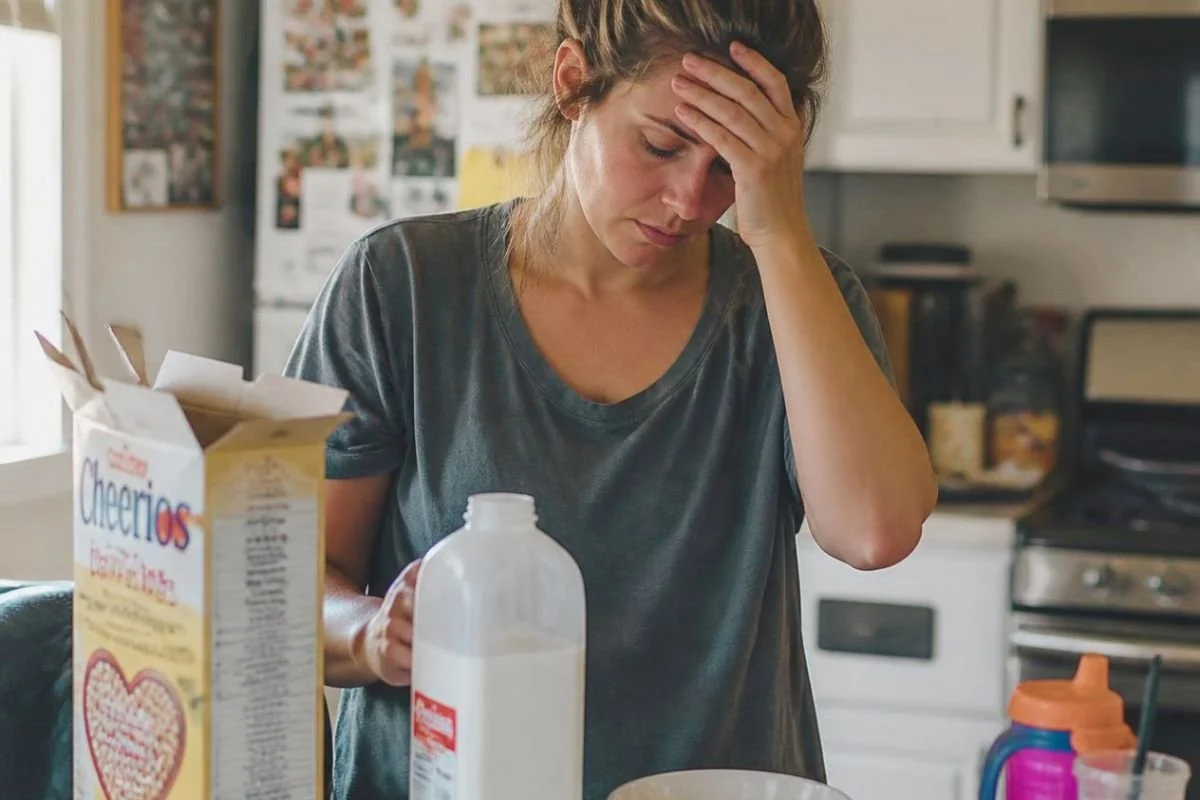
Have you ever walked into a room, looked at your calendar, or opened your inbox and felt instantly overwhelmed, distracted, or like the weight of the world just landed on you at once? Yeah, me too.
That’s because clutter — physical, mental, emotional — affects us more than we realize. In this episode, I sit down with Melinda Grace, professional organizer, author of Reclaim Your Space with G.R.A.C.E., and founder of Melinda Grace Organizing to talk about what’s really going on beneath the surface when clutter piles up. Because as Melinda knows, it’s rarely about the stuff. Drawing from Hebrews 12:1 and her own story of hitting a wall and finding her calling on the other side of release, Melinda walks us through her faith-based G.R.A.C.E. method and shows us how creating space around you might be exactly what God is using to create space in you.
In This Episode, You’ll Discover:
Why clutter raises women’s cortisol levels significantly and what that might means for your ability to hear God, pray, and discern His voice.
The connection between your physical space and your internal spiritual capacity, and why one almost always reflects the other.
How Melinda went from a waking up in a panic in her LA apartment to discovering her calling, and what that journey taught her about releasing what no longer fits.
A walk through the G.R.A.C.E. framework — Gather, Release, Acquire, Cultivate, Enjoy — and which step most women get stuck on.
Why every release, even when it’s a good one, involves a loss, and how to grieve what you let go of with faith and intention.
What to do when you can’t let go of something that belonged to someone you’ve lost.
Resources Mentioned
Reclaim Your Space with G.R.A.C.E. — Grab it on Amazon HERE.
Grab Melinda’s Freebie Refresh Your Kitchen: Top 10 Organizing Hacks
Melinda Grace Organizing — Work with Melinda
Note: Some links above may be affiliate links, which means a small commission may be earned at no extra cost to you. I only recommend things I genuinely use, love, and can vouch for.
-
Episode 07 | It’s Rarely Just About the Stuff: A Conversation with Melinda Grace
Welcome to The Purpose Project Podcast
Hey, friend. Welcome to The Purpose Project Podcast, where we talk about what it really looks like to live, love, and lead with purpose and authenticity in the messy middle — that space between where you are and where you want to be. I'm Valerie Jones, a Christian life and leadership coach, and around here we don't do hustle culture, perfectionism, people-pleasing, or self-help band-aids. Instead, we're all about biblical truth, brain-based tools, and emotional health — so you can walk out your calling with courage without burning out or sacrificing what matters most. Each episode we'll dive into real life stories, engaging conversations, and relatable teaching moments to help you get out of your head and into the life God's calling you to live. Whether you're navigating change, feeling overwhelmed, craving clarity, or just trying to feel like yourself again — take a breath and lean in. You're in the right place. Let's dive in.
Introducing Melinda Grace
Well, hey friend, welcome back to The Purpose Project Podcast. I'm your host, Valerie Gibson Jones, and I'm so glad you're here today.
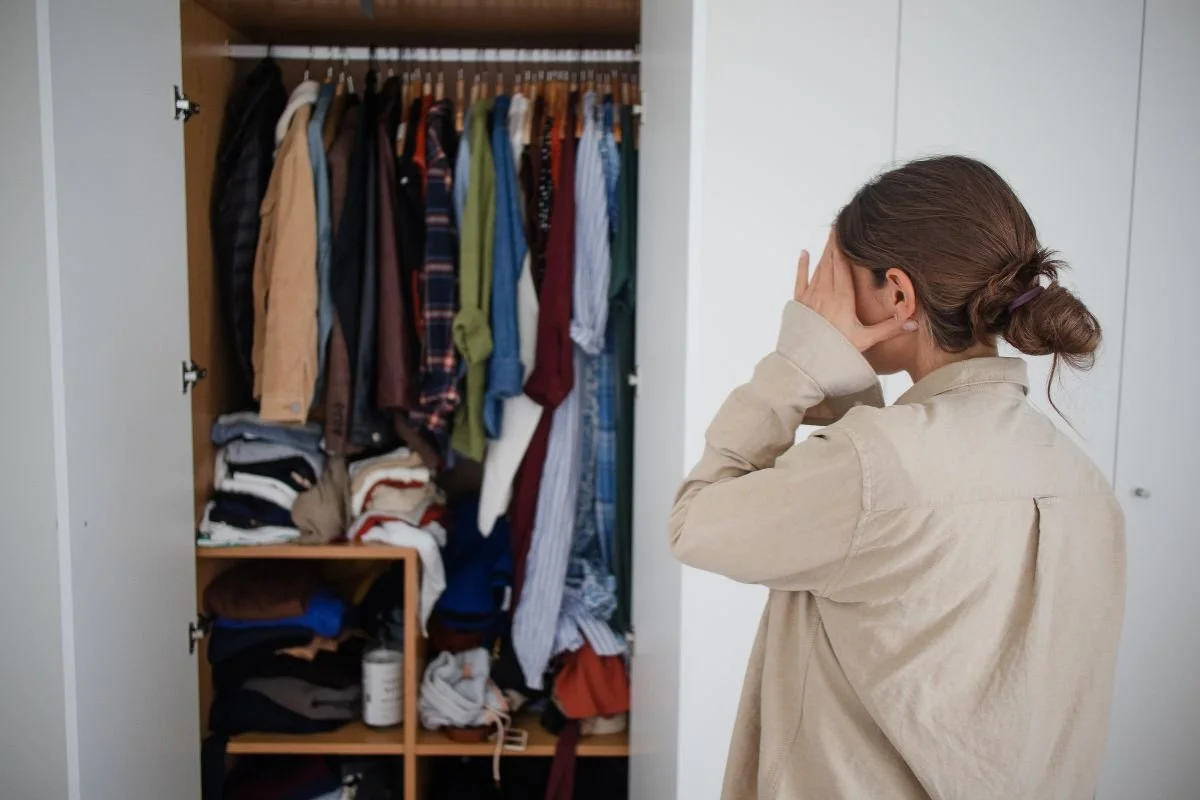
I want to say something right up front. This episode is not about your junk drawer. My guest today is a professional organizer, which is pretty fantastic by the way. But you may be wondering why we're having a conversation about clutter with a professional organizer. You may even be tempted to think this one's probably not for me. But I want to encourage you to stay with me, because what we're actually talking about today is weight — a kind of weight that accumulates quietly in the spaces around you.
Hebrews 12:1 says, "Let us strip off every weight that slows us down." Clutter and disorganization can represent that kind of weight, and that's exactly where we're going today. We're going to talk about why clutter affects us so deeply, how there is a physiological response to our environments, to clutter. We talk about why letting go feels an awful lot like grief, and we talk through the G.R.A.C.E. Method.
This is a Bible and brain conversation through and through, and I can't wait for you to meet today's guest, Melinda Grace. As I mentioned, Melinda is a professional organizer and a lifelong follower of Christ with over 15 years of experience in business, nonprofit, and the entertainment industries. Realizing that grace, home, and faith were everything to her, she started her organizing business in 2020 to help working moms declutter and reconnect with their calling. She's the author of Reclaim Your Space with G.R.A.C.E., which is built around her signature G.R.A.C.E. Method.
I cannot wait for you to hear from her. So let's get started.
From Astronaut Barbie to Professional Organizer
Valerie: Well, welcome to the podcast, Melinda. I'm so glad to have you today.
Melinda: Oh, thank you, Valerie. I'm so excited to be here. I just love you. I love your messages, and I'm excited to dive in and learn from you. I think it's going to be a great conversation.
Valerie: I hope so. I think it will too. I feel the same. I'm very excited to talk to you and gain wisdom from what you have to say and from the work you're doing. But let's start at the very beginning. Tell me a little bit of your story. How did God get you here, where you are right now, doing what you're doing?
Melinda: Yes. I love telling my story because I think a lot of women can relate to it. I also think it's funny because most organizers, if you meet them, this is kind of like our second career — I'm definitely in the same boat as most organizers. And I also wanted to preface my journey by saying that I'm definitely 100% a child of the '80s. I played with Barbie dolls. My favorite one was the astronaut Barbie doll. And so I was definitely taught that women can be anything, we can do anything, we can have the career that we want.
And then obviously growing up, we know that we also want the career that brings us the most joy and passion and a calling. Those kinds of opportunities have really become available to women. So that's a huge part of my story — because I feel like for most of my life, I've been on that journey of finding that career that makes sense with who I am, and that is also a calling, has purpose, brings me joy, and brings the people I help joy.
So that's a little bit of background. But I came into this — or God led me to this — because I had been pursuing a career in acting, and I was having the time of my life. I got to live in New York City, and God always provided for me — friends, a job, acting gigs, talent managers, agents. He just provided all along the way. And then I moved to Los Angeles in 2014 because I really felt led to do Hollywood. I don't know if I felt led or if it was vanity — who knows. But I ended up in Los Angeles to try to do TV and film, and it just didn't work out for me.
One day I was having the time of my life auditioning for movies that Reese Witherspoon was producing — Hulu and Netflix — but I wasn't getting booked for any of the jobs, which means I wasn't making money. The job I had came to an end, so I was looking for another job. And there was just a day where acting didn't become fun anymore. It was draining my wallet. I had no money left. I spent all the money I had on a solo show, which I sold out and got great reviews. But it wasn't like La La Land — I didn't book an independent film after that and become famous. Nothing happened for me.
And somewhere along the way, between the hustle and worrying about money and career and everything, I just forgot to really pray and focus on God. I just got wrapped up in it all.
When the Dream Job Isn't the Right Job
So I was running around trying to find a digital marketing job that I liked. I tried so many, and I didn't like them. And one day I took this dream job for an independent film distribution company — which, if you're coming out of the acting world and you get to work on movies with A-list actors and market them, that just sounded so amazing and exciting. But I forgot to do my research, because I was just so anxious to find the next thing and get a job. I also fell in love with this guy — I didn't want him to think I was a complete loser who couldn't pull my life together. So I took this job, and I didn't realize I was going to have to market horror films. And I'm super sensitive to that stuff. For me, I was like, "This is real. I can't do this. It's so evil to me — to my personality and what I believe."
And so one day I just woke up in my apartment and had this huge panic attack — anxiety, could not breathe. Just called home bawling, crying uncontrollably. "I don't know what I'm doing here. I don't know what to do." And they said, "Well, just come home. Just come home."
So I took a deep breath and prayed, and I just really felt like God was calling me to go home. So I hopped in my car, packed a suitcase, and drove home to Houston — which is like a two-day drive.
Valerie: Oh, man.
Melinda: And my head was so full — ideas, searching for a job, acting, this and the boyfriend and love and God and what did I do — shame. You talk about shame in one of your podcasts that I listen to. Guilt from messing up completely. And so I just... I couldn't even listen to the radio. I just had to have complete silence the whole way home.
I was home in Houston for about a month. I reconnected with my family. I went to church there. I saw a counselor. I started reading the Bible again and listening to it. And my boyfriend at the time — he just kind of let me be, but he didn't really go anywhere. He stuck by me, and I'm so grateful to this day. I eventually decided to come back to Los Angeles, and then I got married.
So I started working with a life coach, because it was really, really important to me to find a career that made sense with who I am and my values. You called it, in your podcast, a complete disconnect with your value system.
Valerie: Right.
Melinda: It was a complete disconnect — any job I was looking for, finding. And so I ended up working with a life coach who was a believer, and we just worked through some activities, and I got to know myself. I did the Enneagram, and really made non-negotiables for a career and for who I am and who God made me to be. I really wanted to use the skills He had given me. And then I made a list of all the jobs I'd ever dreamed of and all the jobs I'd ever had, and I made a pros and cons list for each one. And then I reviewed it with my husband, and he was like, "What is this organizing thing? Can you really get paid to do that?" And I was like, "Yes. And there are two TV shows I can show you — one is Marie Kondo, the other one is The Home Edit." So we watched those shows together, and then I did some more research. I reached out to other women who were professional organizers, and he got on some calls with me, just doing the due diligence. And then together we decided, "Let's give it a try. I have nothing to lose." You know, it'll be like the 30th job I've tried — so why not?
Valerie: I love that.
Finding Calling in the Unexpected
Melinda: So I posted on Facebook, started out for free, just to see if it was something I could do. And my friends invited me over, and I organized their spaces, and I just had a blast. I had a blast doing it. They were wonderful to work with. I loved working with my hands. I loved being in people's homes and connecting with them and having conversations. And with organizing, the result is so tangible. It's very clear, very physical — you can see the immediate result. And then as we'll dive into later, there's also a deeper work going on when you organize. And so to be able to see that in my clients' lives and in my friends' lives was just so powerful.
So that was 2020, and here I am six years later. God's faithfulness through my whole journey was so wonderful. So if any of your listeners are in that same boat — exploring, just trying different things, stuck in the middle like you talk about — just hang in there. God doesn't waste anything. He didn't waste any of the jobs I tried. He didn't waste anything. He is just so kind to us.
Valerie: Thank you for sharing that. I really love everything that you're saying. You just said — just experiment, explore. I remember sitting with a counselor not that long ago, and he was talking about that, because I get all wrapped up in needing to make the right decision. Like I'm going to be stuck with it. That was my own self-imposed limitation, and it's actually not true. He said, "You really need to reframe this and just think of it as an experiment." Like, I'm just going to try this and we'll see what happens. And I can trust that God in me, God with me — it's enough for me to navigate whatever might go wrong in my experiment if it doesn't turn out the way I hope or think or plan.
So I love that you said that, and it really is encouraging. I think so many times we need permission. We need permission to say, "I'm going to try this, and I really don't know how it's going to end up — but that's okay." It's going to be okay.
Melinda: Mm-hmm.
Valerie: At what moment in the process, Melinda, did you — you've used the word calling and purpose. At what moment did it become that? Instead of just this fun thing that you picked off of your list to do, at what moment did it shift into "this is my thing, this is my calling and my purpose"? How did you discover that?
Melinda: Yeah. So I think when I started charging for it, that also helped. "Oh, I can make money doing this? This is crazy." That makes it feel more real and purposeful — not like a hobby or just helping out a friend. And then I think when I got my first client that wasn't my friend or family —
Valerie: Yes.
Melinda: It just really felt real. This random person is trusting me. They're letting me into their home. They're sharing with me their overwhelm and then their goals for a vision of a life that they want to have. And I think the first time I experienced that, I was like, "Whoa, this is incredible. This is really powerful work — or can be really powerful work." And then at the time, I also have to give credit to the life coach that I knew and was working with, because she also wanted me to do a workshop and offer that to some of her clients. And so I did a workshop, and seeing that powerful transformation — even digitally — was also very eye-opening. Like, wow, this really is a calling, a gift that I can use to serve other people, while also feeling satisfied that I'm living it out. The alignment was there.
Valerie: Alignment is so important. It's really a classic and beautiful example of how two things can be true. I think sometimes we think work is supposed to be a chore, that we're really very fortunate if we happen to like the work that we do. But in reality, there is work that we can do that can be fulfilling. It can be both and — it can be work and also bring us great joy. And your story is a beautiful example of that.
Melinda: Yes. Thank you.
It's Rarely About the Stuff
Valerie: You've already mentioned the G.R.A.C.E. Method. You have a book, Reclaim Your Space with G.R.A.C.E.
Melinda: You got it right.
Valerie: I really enjoyed the book. I'm going to have the link for everybody who's listening. You talk right from the start of the book about Hebrews 12:1, and you compare clutter in our lives to weight — weight that we perhaps need to strip off. You talk about how it can hinder our ability to hear God, our ability to step into the things that God might be calling or leading us to. Let's talk a little bit about that.
Melinda: Yeah. So I have the Bible verse here just for those listening: "Therefore, since we are surrounded by such a huge cloud of witnesses to the life of faith, let us strip off every weight that slows us down, especially the sin that so easily trips us up." Hebrews 12:1, New Living Translation. The G.R.A.C.E. Method is kind of born out of that. And also, I've just needed a lot of grace in my own life to get to this point. And then when you're decluttering and organizing, it's really easy to put all these labels on yourself — because when you're decluttering, Marie Kondo says you're coming up against yourself, and who you are, your past, your future. Everything is coming up. And so you just need a lot of grace when you're organizing — for the emotions that come up, for your life experience. And I want it to be an enjoyable process for anyone who does it. I don't want it to be so strict and rule-driven, to where the process itself becomes a weight — because that defeats the purpose.
Valerie: You say it's rarely about the stuff.
Melinda: Oh —
Valerie: There's always something happening underneath the clutter, underneath the stuff. And I think you've already alluded to it a little bit. We come up against things. Things bubble to the top when we're working through this process. There were some stats that you shared in your book that I'm going to share here just because I was completely like, "Oh my goodness." And then we can talk a little bit more about that. It is very clear, based on what I read in your book and in my own work and what I've come across, that there is a direct connection between the external and the internal — and vice versa.
So — one in four Americans have a clutter problem.
Melinda: Correct.
Valerie: In the average home there are 300,000-plus items.
Melinda: Yes, and that study was done before the pandemic — before we all got addicted to buying things on Amazon.
Valerie: Oh no. Wow.
Melinda: My gut tells me that number is even higher now. The other one I love so much — a group of anthropologists worked with UCLA and did a study showing that we are the most materially rich society in the history of humanity. It's what we grew up with. It's what we know. It's what most of the modern world knows. And when you stop and think about it — for centuries, hundreds of thousands of years, people did not have this much stuff. This is definitely a modern issue.
Valerie: And one of overwhelm and overload, right? Here are two more. Americans spend two and a half days a year looking for lost things, and $2.7 billion replacing misplaced possessions.
Melinda: Yeah. So —
Valerie: It's an indicator that maybe we have too much stuff, right?
Melinda: It's a time suck, it's a money suck.
Valerie: Oh, man. Yeah, 100%.
Melinda: And I love that you brought it up. I think it's very eye-opening, and I hope that this conversation leads to many more. I hope people start questioning — "Oh yeah, you're right, I do have a lot of stuff. Is that okay? Is it affecting me? What's going on?" I hope this is a question everyone starts to ask themselves.
Valerie: Yeah, it brings awareness to the situation.
Melinda: I just wanted to get back to — you said it's rarely about the stuff, or you quoted me —
Valerie: That's what you said, Melinda. You said that, and it's really good.
Melinda: Yeah. So clients come to me because for them it is about the stuff, and they're like, "I just need help." And that is the physical manifestation of something else going on. So, what is it — what could possibly be going on that this clutter has built up? Sometimes it's simply an issue of time and priority. I have a toddler now, so I definitely understand the issue of time. If you're in the new mom phase, time is definitely an issue. And then sometimes it's just a priority issue — there are other more important things happening right now. And then also, I've learned the importance of feeling safe. Sometimes the issue is that people feel safe with the amount of clutter. It makes them feel safe for whatever reason.
And then it can also be about fear — fear that God's not going to provide for you again. The scarcity mindset is very real. It's almost in our DNA — we were hunter-gatherers at one point, living off the land, and scarcity was just a part of who we are. So I think that's another thing underneath all this stuff.
And then also — fear that we're going to lose the memory —
Valerie: Hmm.
Melinda: Of the experience, the person, the situation. Now, I also want to say — a lot of times clutter isn't this deep. If you need to throw away a sock because it has a hole in it, obviously you're not going to hit a wall. Or if you're cleaning out old screws in your garage, sometimes it's just trash, and it makes sense, and it's easy. But a lot of times it does end up being these things.
A really great example from my own life — I'm in my home office, and I've changed careers from acting to this. So I still had a lot of my acting books, my scripts, all these different things you need if you're going to pursue acting. And a lot of it I had learned in New York, and New York was a very transformational time period in my life. I feel like living there helped give me my voice. And reading playwrights like Chekhov and Tennessee Williams — they really helped me understand a lot of myself, and I got to play a lot of those characters on stage. So I was very emotionally tied to those plays, to that experience.
Valerie: Sure.
Melinda: But I also felt like — and knew — that God was calling me into a new season. With my business, with this book, with doing podcasts and talking more about that intersection of faith and organizing. And I'm a new mom. I just felt like a new season was coming, or that I was suddenly in a new season. So I was questioning — do these books still fit? Is that an old life? Is it a memory I want to curate and keep in my office, or is it something I need to let go?
And I really wrestled with that for two, three weeks. The struggle is real. And I was afraid that if I let go of these books, I'm going to lose a part of who I am.
Valerie: Right.
Melinda: That's a big deal for people. If I let go of this thing — whatever it is that has a memory or feeling attached to it — am I going to lose part of who I am? Am I going to lose that memory? Am I going to lose that connection? I love that word — connection. Am I going to lose that connection to that person, to myself, to God?
And so that is very real, and it's a very real stumbling block for many people, especially when they're decluttering. So in response to that, I did a webinar with my friend — Glenda is her name, she's a life coach and strategist. And she's the one who helped me realize the feeling, the emotion, is not physically in that item. It's in us. So if we let that item go, it's okay. We can sit down with a cup of tea and channel that experience and that feeling anytime we want. It's in us. It's a part of who we are.
And so when we let go of those things, it's okay. I was able to let go of those books. I gave them to an acting friend — a girl here who was studying for theater. And that just felt really good. I just felt like this weight was lifted off. New York was amazing. That experience was amazing for me. I'm in a completely different place now. I'm not going to lose that girl. She's still in me. I learned a lot. But now God's calling me to mature in a way, and deep-dive into something special and unique, and I want to be available to that. So to me, that's the beauty in organizing. And bringing that back to Hebrews 12:1 — I'm letting go of those physical items because they were becoming a weight. Because they were sitting up on my bookshelf, and I would look at them and be like, "Oh, I miss acting. I wonder if I could do it again." I don't need to do it again. I'm here. I'm here now, in this moment, and I love it. I love my life. I love where I'm at. I love what God's doing around the world and in women, and I want to be a part of that.
Our Surroundings Are Never Neutral
Valerie: That is so encouraging and inspiring and all of the things. You said something in the book about how the things we have around us — our surroundings — they're sending millions of tiny subconscious signals and messages, and we don't even realize it, good or bad. And I talk about this all the time. Who do you want to be? Because we're always becoming. We didn't just arrive and now everything is static and flat. It's a continuous process of growth and a journey.
I think we talked about this in our conversation before — how it sometimes feels, I look around and think, "This doesn't fit who I am anymore." The things that I needed to carry in the last season, or needed to have around me in the last season, they aren't things that are going to serve me well in the next season. It's like new wine in old wineskins — Scripture talks about that, too. Or keeping our hands open so that the Lord can put things in and take things away as He needs to, to work His plan out in our lives.
You're just a beautiful representation of that. I love it so much.
Melinda: And I love that — I feel like in my work and my method, it allows room for the seasons of life to happen. It's not so strict where it's "get rid of everything." It's more like — what season are you in? What season is God calling you to be in? And can we get rid of the stuff from old seasons and prepare the way for something fresh, something new, where we are now? And sometimes we're in the middle of a season — not on the edge of a new one.
Valerie: Right.
Melinda: You can still check your space. Is there anything from the old season that's not serving you right now in this moment?
Valerie: Right. It's not neutral. There is nothing that's neutral. And so I think sometimes we get in trouble thinking, "Eh, it's not a big deal." No — it's not a neutral thing.
Melinda: It's like — when we adopted my son and I was suddenly thrown into being a mom of a tiny baby, I needed certain things to help him live, to help him thrive. Well, now he's a toddler and I don't need those things anymore. I can let them go. I can pass them on to another new mom, or maybe we'll adopt again so I can put them in a box. But I don't need them in my physical space. And he doesn't need them either — he's mentally growing, he needs different toys.
Valerie: That's a really great, practical, tangible example of exactly what we're talking about. So we're going to get into the actual method. I want you to give us a little bit of an overview. But before we do that — what I understand from reading the book is that this isn't necessarily about getting rid of everything that you love or that you need, or about a bunch of rules. It is about intentionality, and about agency to make choices about your space and your stuff and your things. Would you say that's true?
Melinda: Yes. We're all unique people, living in our homes with the life that we've lived, shaped by who God made us to be and the experiences we've had. And so there are different things that are important to different people for different reasons. There are rooms that end up more cluttered than others for different people and different reasons. I think just being able to slow down and have intentionality when you organize will make the experience so much more meaningful — for you and for your family.
And when you do that, you can create space to invite God to be a part of the process, which I love. I'm a big prayer. I pray all the time, inside my head. And I think it's kind of shocking when I say that you can invite God in when you're decluttering or getting ready to organize — but you can pray, and He can help you, and you can make decisions. He blessed you with these items. He blessed you with the place where you live. It doesn't have to be a big house. Maybe you live in an apartment or with a roommate. That's still your home that you can create and cultivate with Him.
Valerie: That's a really powerful reminder to invite Him into everything. We always talk about how concerned He is with the details, but we forget to invite Him into the details. And I think it changes things when we start out that way.
Melinda: Yeah.
The Science of Clutter
Valerie: So before you talk about the method — one more thing. We've talked all around it, but I would love for you to distill it down, just a few sentences. Why is clutter so bad for us? What's the big deal about clutter?
Melinda: Well, we've already talked about it. Clutter can be a time suck. It can be a money waster. It can also keep you from having relationships with people and with God. We learned in the pandemic that being isolated is not good for us. It's not good for our kids. And so sometimes I do have clients who won't invite people over to the house because it is too cluttered. That's a real deal — it may sound silly to some people, but it's a real deal for others. Not wanting people to come over because they feel their space is too messy. We need that connection.
But also, there has been scientific research that shows clutter can negatively impact our mental wellbeing, particularly among women. Women who have issues with clutter have a cortisol pattern that is associated with people who have chronic fatigue, post-traumatic stress disorder, and a higher risk of mortality. I don't think anyone's ever realized that — I didn't realize it before I started writing my book. And cortisol is so important — it's a hormone, it helps regulate stress and all these things. And so I think some people are like, "I'm banging my head against the wall. Why can't I hear God? Why can't I connect with Him? What's going on?" Sometimes He is distant. But other times I think it's just our space, our clutter — our cortisol levels are risen, there are a million other messages speaking to us in the space.
Valerie: Wow.
Melinda: No wonder we can't hear God.
The Memory in the Object
Valerie: Yeah. That's really true, and not something that we naturally think about or connect. We don't connect the dots between those two things. And there's something else — you know, there's physical clutter, but there's also mental and emotional clutter, right? That can hold just as much space in our lives. And sometimes when we're working through this process, at least in my own life, it all comes — that is the thing. The emotional and the mental clutter bubbles right to the top when I'm looking at that can opener.
I told you about the can opener in my garage. It was one of the gifts that my mamaw gave me and it is still in my garage. I almost got rid of it after our first call, and maybe today will be the day. But it is still in my garage. It doesn't work. It's broken. I've not used an electric can opener — it's probably been a decade. She passed away seven years ago, but I look at the thing and all of it —
Melinda: It's there.
Valerie: It's all there.
Melinda: She's there.
Valerie: Yes.
Melinda: You will always be connected to her.
Valerie: Always be connected to her. And you so beautifully articulated that already. I'm going to text you later and tell you that I got rid of it.
Melinda: I was going to remind you of that verse — "Be still and know that I am God." How can we be still when we are inundated with all this noise — on our phones, TVs, computers, the internet? We have that bombarding us, and then you step into your room, and it's just filled with all this clutter speaking to us, and decisions that need to be made.
Valerie: Yeah. That's a lot of chatter, isn't it? A lot of chatter. I always say this to my husband — "I can't cook in a dirty kitchen." Like, if I walk into the kitchen and there are dishes piled everywhere, stuff piled on the table, I don't walk in and think, "Oh, let's have a nice family meal and I'm so excited to prepare." I can't even — all I can think is, "I've got to clean up the mess." It is distracting from the moment I walk in. So I can relate to that on so many levels.
Introducing the G.R.A.C.E. Method
So — the G.R.A.C.E. Method. Walk us through that.
Melinda: I came up with this because I really wanted an encouraging process for people. I mean, the organizing process is generally the same — I'll be honest. But I just wanted to put a perspective on it that was full of grace and hope and joy, and also give a 3D look at the experience, like we've talked about. A lot of methods are very 2D, which is fine — maybe that's all you need. But for those of us who want something deeper, this gives room for praying with God, journaling, having an experience, and dealing with the issues that come up. So it's an acronym. My middle name is Grace. And you've already heard my life experience — I've needed a lot of grace, and we all need a lot of grace. You even mentioned that in your podcast — that grace is a necessity for all of us, through what we're going through, through living life.
So — the G is Gather. We're going to gather our goals for the space. I'm a huge fan of Zig Ziglar.
Valerie: Oof.
Melinda: My dad was in his Sunday school class when we lived in Dallas, and I have tapes of him teaching. I just love his work. He set our country — and the modern world — off on this goal-setting craze, and I love it. So we're going to set our goals for the space. If I'm going to organize my office, I want to know what I want to accomplish in that space. What do you want that space to be? Is it a craft room? Is it a workout room? What is the function of that space? And setting a goal around that is great. Do you want it to be beautiful? Do you need it to be functional? Who are you? What do you envision it to look like?
So that's in the Gather. You're going to gather your goals and your vision for your space. Then you're going to gather organizations, charities, or friends you might want to donate or give things to — just make a list. It gets your brain turning, the wheels turning. So when you're organizing, you're like, "Oh, I can give this to this person. Oh, I can donate this." The decisions can roll out faster.
Then you're going to gather all of your supplies — boxes, trash bags, Sharpies, Post-It notes. And then you're going to gather all the things. So it's kind of a loaded step — but to me, every step is fun. So you're going to pull everything out of your space, whatever space you're working in, and sort and categorize. If you're working in your home closet, you're going to pull out all the T-shirts, all the blouses, all the pants, all the shoes, the socks — sort them into categories. If you live in a smaller space and don't have the time or room to pull everything out, then start in sections.
So that's the G. Then the R is Release, and I love this word. It allows for so much depth — because when you release something, that opens the door for something new to come into your life. And like we've talked about, releasing can be hard. So you can spend a minute praying with the Lord. There's a guided journal you can download with the book where you can journal about anything that comes up and work on releasing it. And then you release the items you feel like you should release — the things you don't need anymore. You can let them go.
Then the third word is Acquire — and somebody asked me, "You just got rid of all this stuff, why are you going to acquire more things?" I'm like, "Oh no, no, no, no. It's not acquiring more things. It's acquiring what you need to complete the organization of that space." So maybe you have a reach-in closet and you want to wallpaper the back wall — now you have everything out, you can go acquire the wallpaper and stick it up. Or maybe you want to repaint while it's clean and everything is out. Maybe you have extra money and you want to buy beautiful baskets to store things in. It's acquiring all those little finishing things.
Then the next one is Cultivate. Cultivating is a gardening term — it means to tend, to grow. As you're organizing, you're going to start putting things away using the bins you bought. You're going to start labeling them. You're going to start creating systems. I love to call it a rhythm — like a dance in your home. You're going to create a dance in your space with how you live your life, how you grab the items, how you put them away, in a way that makes sense to you and how you function. And sometimes that takes longer than an hour to figure out. Sometimes you put it away and think, "Oh, that didn't work — I'm going to adjust it. Oh, this bin doesn't work — I'm going to return it, get a different one." That's okay. It's your journey. It's your process. It's your home. It's your rhythm that you're developing and cultivating.
And then the E is Enjoy — because you gotta enjoy it. Life is so short. We only get a little bit of time here, and you just did all of this work. And we have the greatest example — God rested and enjoyed His work when He finished creation.
Valerie: Hmm. Yeah.
Melinda: So we should enjoy. My favorite thing is tea, so I love to grab a cup of tea and just be in the space and thank God that He gave you the ability to organize, that He showed you where to give things away, where to put things, the rhythm you created, how He walked you through the process. Just enjoy. I think we move so fast in life that it's really hard to slow down. And obviously when you're organizing, you're going to get the organizing bug and keep going. But I would just encourage you — when you finish a space, no matter how small, stop and enjoy and celebrate that you did it. It's also scientifically proven that when we give ourselves little rewards, it keeps us going.
Where People Get Stuck
Valerie: Where do people typically get stuck in this process? Is there a pattern you see in working with clients — where they stall out or lose motivation?
Melinda: Yeah. I would say people definitely have a time limit — how long they can handle going through things. Which is why they hire me. But I would say the hard part is the Release, when they hit an emotional item.
For example, I have a client — she's an amazing woman, has two kids, widowed mother.
Valerie: Hmm.
Melinda: We were organizing her garage, and it was full to the brim — she'd forgotten what was in there because she'd had to move there a couple years ago. We were making really great progress. And then we hit a box from her deceased husband. And it just stopped. Everything stalled. She started to tear up. I told her, "Take a minute. Take 10 minutes. We're here. We'll keep going, but you can take a break." And that's what happens. That's where it is.
Valerie: Yeah.
Melinda: Life builds up because life happened. Somebody passed away. You had to move. You've had a medical emergency. It's just life. There's no shame, there's no guilt around it. And then you hit an item that means a lot to you for whatever reason, and you have to stop. And that's okay. We can pray, we can journal, we can learn from people like you how to cope with those moments and deal with them. And then when you feel ready, you can jump back in. So I would say that's the biggest trip-up.
Valerie: I remember after losing my first child — when it was time to get rid of things, it took years before I was ready to do that. I was able to put everything in one place and store it nicely, and I just had to literally put it on a shelf until I was ready to come back. And it took a long time before I was ready to come back. I think it's probably such a gift to have somebody like you walking alongside in a situation like that — just with those reminders that it's okay. It is okay to take a minute. It's okay to move this over here and wait.
Melinda: She still hasn't gone through that box, and it's fine. It's her journey, it's her life. She's going to get to it when she's ready. There's room for grace.
Valerie: There's grace. There it is. That's so good.
Starting Where It Hurts the Most
So — what do you say to the woman who is looking around right now and thinking, "Yeah, I really could probably use this book, I could use a little organizing in my space" — but she immediately stalls because she doesn't know where to start?
Melinda: First of all, it's okay to be overwhelmed. Just accept that you have those feelings and put the shame away. Put the guilt away. We all have clutter. We are the most materially rich society ever in the history of mankind. So it's okay.
Valerie: Yeah.
Melinda: And then I would say go back to the beginning with the Gather. One of the activities in my book is to close your eyes and walk through your space, and get a sense for what area of your house is stressing you out the most. Most of my clients come to me because their kitchen is bugging them, their primary closet is bugging them, or their home office. It's usually one of those three. So whatever space, area, cupboard, or drawer is stressing you out the most — that's where I love to start, because you're going to find the most immediate relief. And why wouldn't you start there?
The only thing I don't start with is memorabilia. Those are too hard to start with if you're already overwhelmed and feeling paralyzed. Kitchen's a great place. Closet's a great place. But it has to be you — when you close your eyes, what is stressing you out the most? Let's start there. Let's find immediate relief so we can keep moving forward.
Practical Tips + Rapid Fire
Valerie: So a couple of fun questions here to wrap us up. What is your favorite organizing tip or hack? Do you have a go-to?
Melinda: Well, I love organizing kitchens. They're one of the harder rooms to organize because everyone uses it and has their own opinion of how it should be. But the more you can minimize the packaging in your kitchen, I think the better. The more you can buy a clear glass jar or the OXO containers or the spice jars — I'm obsessed with it. It really does eliminate a lot of mental noise, because think about it — every time you buy something and it's packaged, it has to have all the FDA things on it, the ingredients, the calories, the marketing slogan, their colors, their branding. And it's like — I just want rice. I just want to use some salt. I don't need all this other noise. If you have the time and the resources, that's my favorite thing.
Valerie: So is the kitchen your favorite space to organize? Is that your favorite project?
Melinda: My ultimate favorite is a primary closet.
Valerie: Oh, okay.
Melinda: Kitchens is a close second.
Valerie: Okay. All right. I remember last summer I treated myself to a clear drawer for my eggs in the fridge, and my kids were making so much fun of me. I'm like, "Watch — it pulls out. It opens." I totally relate to the containers. We laugh about that. So I love that. That's really great advice.
Big LIfe Life Lessons
So — knowing what you know now, about clutter and organizing and the internal-external connection, what would you say to a younger version of yourself?
Melinda: I would say it's okay to change and be different and keep growing. I feel like my younger self was worried about who to be friends with and popularity and being cool. And I feel like I missed out on cool relationships with people that I regret to this day, because I didn't give them more time. And so I would tell myself to just be more aware of that — be more aware of the amazing people in your life, and not worry so much about people's opinions. And be okay to change and grow.
Valerie: That's really beautiful. Thank you. Thank you for sharing all of your expertise and your wisdom. Where can people find you online, Melinda?
Melinda: Yes, my website is melindagrace.com. I'm really working hard on releasing a course and group coaching around this, so you can have more access to me and I can hold space for you. I'm hoping that will be available in the fall by the time this podcast comes out. So that's also on my website.
But you can also connect with me more one-on-one on Instagram — you can DM me, message me. That's @melindagraceorganizing. So those two places.
Valerie: That's amazing.
Melinda: And there's also a freebie on my website. If you go to my website, there's a free — 'cause I love kitchens.
Valerie: Ah.
Melinda: There's a free time-saving kitchen hack guide for anyone who would want that. You just go to my website and download it.
Valerie: I’ll make sure to have that link in the show notes. And I'm going to go download it myself as soon as we get done here. I'm so grateful, Melinda. You are pure joy, really. It's a beautiful thing to see how God is working in and through you, and you really are just radiant. It is a gift to sit with you today, and I'm so, so grateful for you being here.
Until Next Time
Melinda, thank you again. This conversation was exactly what I knew it would be.
Friend, I want to leave you with one question. Not a to-do list. Not a challenge to overhaul your entire home this weekend. Just one question.
What might you be carrying that God is asking you to release?
It might be something physical — a box in the garage, a pile on the desk, a room full of things that belong to a season you've already left. Or it might be something deeper than that. A version of yourself that you're still holding onto. A grief that you haven't quite named. A fear that's been living in your space rent-free for years.
Here's what I know. What you needed in the last season won't always serve you in the next one. And sometimes the most faithful thing that you can do is let it go. And sometimes the thing that God is asking of you is literally to make room — physically, emotionally, spiritually — because He has something new for you that is far beyond what you could ask or imagine.
Do yourself a favor — grab Melinda's book, Reclaim Your Space with G.R.A.C.E. It's linked in the show notes. I read it, I marked it up, and I think you're going to find it incredibly helpful. Go grab a copy.
Hey friend, thanks for tuning in to The Purpose Project Podcast. I hope today's conversation helped you feel seen and a little less alone in the messy middle of life. If this episode encouraged you, would you take a second to share it with a friend or leave a quick review? That will help other women who need hope and encouragement find this space, and it truly means the world to me.
You can always find free resources, upcoming events, or join the email list by visiting my website, thepurposeproject.us. Remember, friend — you were created on purpose and for a purpose. Until next time, be brave, and eyes on Jesus.
Meet Your Host
I’m Valerie Jones, a Christian Life & Leadership Coach and the host of The Purpose Project Podcast. I created this space for Christian women who are navigating the messy middle: those in-between seasons where faith is real but stretched, and life doesn’t look the way you expected.
My approach is rooted in biblical truth, emotional health, and brain-based methods because I believe God designed us as whole people, and transformation and personal growth should consider our whole selves.
“It’s rarely about the stuff”
More from The Purpose Project

Stay Connected
If this episode resonated with you, I’d love to stay in touch. Sign up below to get honest, faith-filled reflections and encouragement delivered straight to your inbox plus, you’ll never miss a new episode.
Support the Show
If The Purpose Project Podcast has been meaningful to you, consider showing your support. Think of it like buying me a coffee — every gift helps keep this podcast going and helps this message of encouragement reach women who need it.