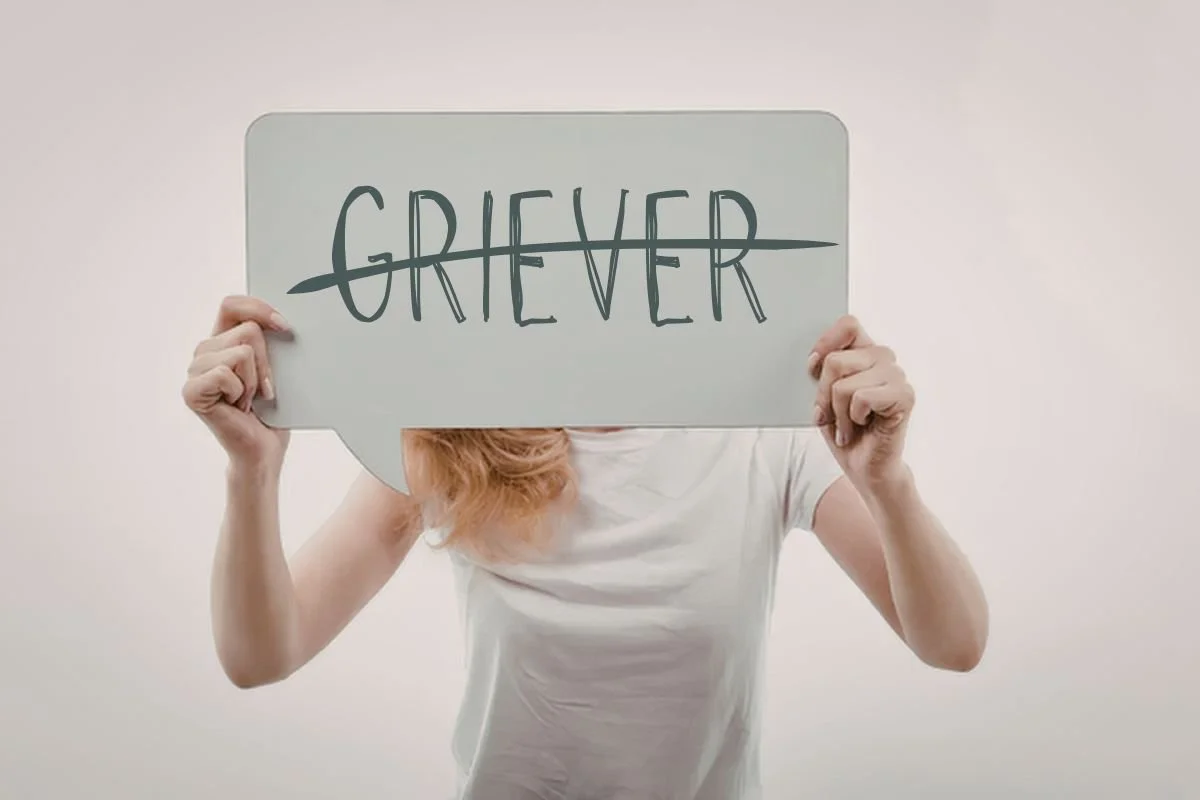
Someone called me a griever once. I immediately bristled. No.
That's not who I am. And it's not a label I want to carry.
She meant well. We ran a grief-focused organization together — work that was genuinely meaningful. But she used that word freely. For marketing copy. For presentations. For the clients. For herself. For me. It was a "once a griever, always a griever" kind of belief. And it bothered me from the beginning.
At what point do we get a new label?
I had grieved, yes. That part was true. But I had also healed. So something in me pushed back every time she used the label. Not just for me. For every person who walked through the door suffering through loss. When do they get a different word? And if the label never changes, what are we actually offering them?
Here’s the thing: words matter. And not all words are created equal. Some words describe a season, a situation, a process, an activity. Others define who you are. That’s the difference here. Grieving and griever. One indicates a process. An implied exit. It says you are in the middle of something — which means, by definition, there is more to the story. The other names you. It feels fixed. Static. No next chapter implied. No room to become something else.
Griever is that second kind of word. It was assigning an identity.
This is nothing new. Scripture has plenty to say about names and identity.
Names matter in Scripture. They carry meaning, intention, identity. God designed it that way and sometimes, He even changed someone’s name. Think of Abraham and Sarah. Jacob. Peter. Paul. When God gives a name, He's making a declaration about identity. He named people based on purpose, not pain. Most of the time, when God changed a name in Scripture, it wouldn’t have seemed accurate based on the current circumstance. But, He didn’t choose the name based on what's broken. He chose a name based on who someone was becoming according to His plan. Which makes what Naomi did so striking.
When she returned to Bethlehem after the devastating loss of her husband and both of her sons she told the women in her hometown, “Don't call me Naomi. Call me Mara.”
Naomi means pleasant. Mara means bitter.
She didn't just change her name. She accepted a label. She took the wound, pressed it into the shape of an identity and believed ‘this is the truest thing about me now.’
We can understand the impulse, can’t we? When the pain is significant and deep, it seems like the most honest thing to do. Call it what it is. Haven’t we earned the label, after all? And, aren’t we sometimes content to settle in and stay with it?
Yes, call it what it is. But do not let it define who you are.
God redeemed the brokenness in Naomi’s story. And three generations later, from this family comes one of Israel’s greatest kings. David. It’s the lineage of Joseph, Mary’s husband. Mary who was the mother of Jesus.
Can you see it? The story is far bigger than the label Naomi tried to carry.
But, when we choose to let a label stick, it has a tendency to limit our perspective and shrink the story.
It means taking something that happened to you and allowing it to become something you are. And once the label becomes the identity, wholeness and healing become all the more difficult.
We need our label. We hide behind it. This is why I can't. We wear it as a disclaimer. Don't expect too much from me, you know what I've been through. We use it, if we're being honest, as permission to stay exactly where we are.
The label becomes a hiding place.
And even though we rarely admit it, sometimes we call it our identity. But, friend, your wound is not your identity. It is something that happened to you. But in the hands of a God who wastes nothing, it can become the very thing He uses to reach someone else, but only if you're willing to peel off the label and step out of hiding.
God has an incredible way of bringing purpose from our greatest pain. Do you know why that is? Because we learn things in the difficult seasons that we won’t learn any place else. Formation and transformation in the hard places is part of His process, but only when we refuse the label.
Here’s the thing: the One who made you is the only One who gets to define you. Get serious about what He says about you. And lean in to Him.
Friend, I don't know what label you're carrying today. Maybe someone handed it to you with the best of intentions. Maybe you picked it up yourself because it was the only word that seemed to fit. Maybe you've been wearing it so long it feels like your name.
But I want to ask you a question: does it fit?
Is it describing what happened to you, or is it defining who you are? Because those are two very different things. And only one of them is accurate.
You are not your pain. You are not your anxiety. You are not your diagnosis or divorce, your failure, your worst season, or your hardest loss. You are a woman with a story that God is still writing — and He has never once confused a single chapter for the ending.
Put the label down. Step out of hiding.
Your story isn't finished.
In Episode 05 of The Purpose Project Podcast, I sat down with Jody Hudson, a woman who had every reason to let a label define her. She lost her daughter Alexandra in 2018 after a decade-long battle with Lyme disease. And she put it simply:
"I never wanted to be defined as a grief girl. I always wanted to be defined by His light."
That's what refusing the label and choosing purpose over pain actually looks like.
Turning Pain Into Purpose: A Conversation with Jody Hudson is live now.