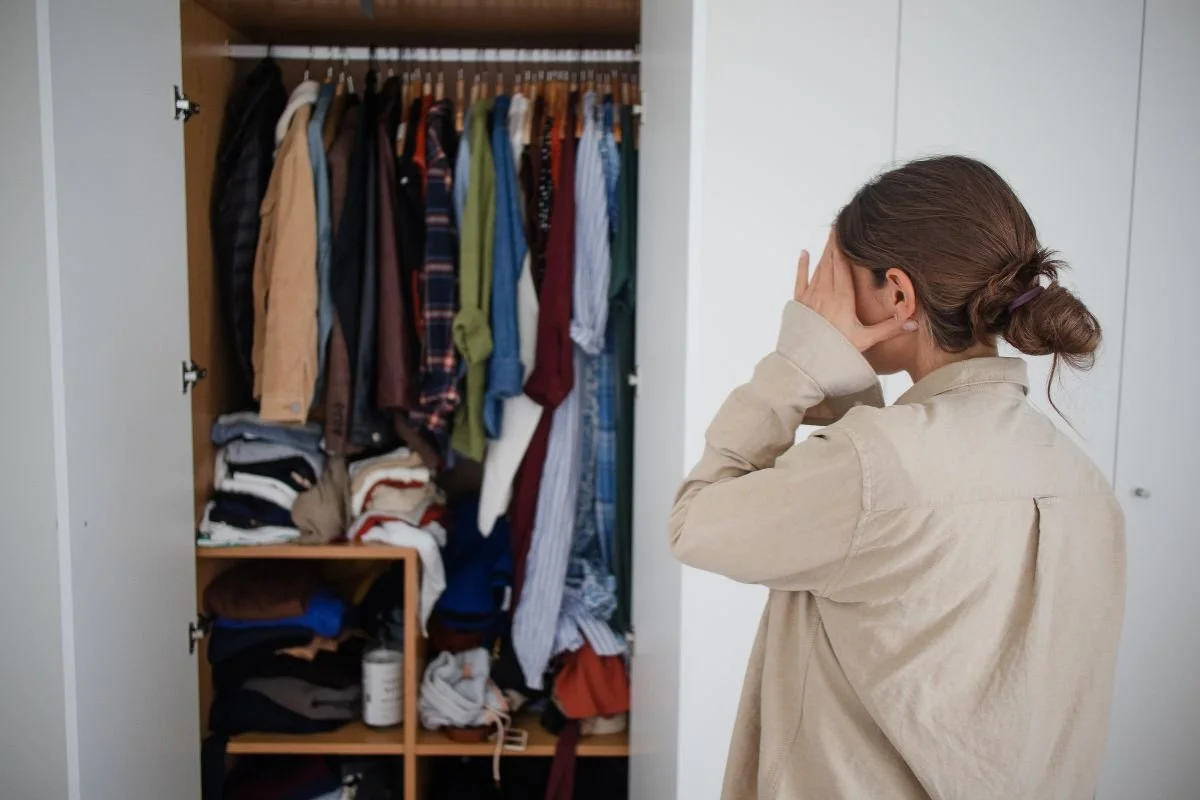
Have you ever had a moment when your life suddenly didn’t look anything like you thought it would? A moment when the gap between what you hoped for and what actually happened felt impossible to hold? That gap can show up through loss, disappointment, transition, or circumstances you couldn’t have seen coming and certainly wouldn’t have chosen. And when it does, it can shake everything, including your faith.
In this episode, I’m stepping into one of the most personal parts of my own story. I walk through John Chapter 11 — the story of Lazarus — and I want to show you something that I think gets overlooked: Jesus knew resurrection was coming. He knew a miracle was moments away. And he still wept.
That matters. Because so often we want to rush past the tension and get to the miracle. But sometimes the most courageous thing faith can do is stay right in the middle of it. This episode is an honest, hope-filled conversation about grief, belief, and the God who meets us in both.
In This Episode, You’ll Discover:
Why the story of Lazarus speaks so powerfully to seasons of waiting, disappointment, and unanswered prayer.
The personal story of loss that shaped Valerie’s faith — and what she got wrong about grief and belief.
Why strong faith doesn’t mean the ignoring sorrow and why that’s actually good news.
How grief and belief can exist in the same story without canceling each other out.
The honest, imperfect prayer that can carry you through the hardest seasons: “Lord, I believe — help my unbelief.”
-
Welcome to The Purpose Project Podcast
Hey, friend. Welcome to The Purpose Project Podcast, where we talk about what it really looks like to live love and lead with purpose and authenticity in the messy middle, that space between where you are and where you want to be. I'm Valerie Jones, a Christian life and leadership coach, and around here we don't do hustle culture, perfectionism, people pleasing or self-help band-aids. Instead, we're all about biblical truth, brain-based tools and emotional health. So you can walk out your calling with courage without burning out or sacrificing what matters most. Each episode we'll dive into real life stories, engaging conversations, and relatable teaching moments to help you get out of your head and into the life God's calling you to live. Whether you're navigating change, feeling overwhelmed, craving clarity or just trying to feel like yourself again, take a breath and lean in. You're in the right place. Let's dive in.
When Life Doesn't Look Like You Expected
Well, hey friend, I am so glad you're here. Welcome back to the podcast. Have you ever had a moment when your life suddenly didn't look anything like you thought it would, you know, a moment when the gap between what you wanted or what you hoped for and what actually happened felt really impossible to hold.
That gap can show up all kinds of ways in our lives. It can show up through loss, through disappointment, through transition, through circumstances that we couldn't have seen coming, we couldn't have imagined in a million years, and we certainly wouldn't have chosen. And when that happens, it can shake us to the core. It can shake everything around us, including our faith. In the last episode, I called this the messy middle, and it's that space between where we are and where we want to be. And sometimes that gap can feel so incredibly wide that we feel completely lost. Today I'm gonna talk about a moment in my life where I was standing in a gap just like that.
A Story from Scripture: John Chapter 11
But before we go there, I want to take us to one of my favorite places in scripture, which is John Chapter 11.
This is a story about a man named Lazarus and scripture opens up in verse one of that chapter by saying, a man named Lazarus was sick. His sisters wanted to do something, so they decided to send a message to Jesus. It was a simple message. They said, Lord, the one you love is sick. Notice they didn't make a request of Jesus. They didn't ask anything specific of him. They didn't tell him what they wanted, what they needed, or what they wanted him to do, but we all know what they meant, right? That message was loaded with expectation. Lord, the one you love is sick. And if you read between the lines, they're saying, come, Lord, come quickly and take care of this. Do something. Won't you fix this for us and heal him?
Now, it wouldn't have been unreasonable for Mary and Martha to have this kind of expectation. They knew Jesus. Lazarus knew Jesus. They'd seen him heal complete strangers. They'd seen him restore sight to the blind. He had done things that people thought were impossible, and they had a front row seat to all of it. So maybe they felt like they had a little bit of an advantage here because they were his friends, they knew him, they were friends of Jesus. Scripture says it really plainly. It says Jesus loved Martha and her sister and Lazarus. So when they sent that message, Lord, the one you love is sick. They fully expected and believed that help was on the way, that Jesus was coming and that he would do something.
Jesus doesn't actually show up right away. He stays where he was for two more days, and that doesn't make sense to us in human terms at all. Can you imagine what that might've felt like for Martha and Mary? Waiting, wondering when he might arrive, wondering if he even got the message or if he was going to show up at all. And by the time Jesus reached Bethany, Lazarus had been dead and buried for four days. Now, if you've ever waited on God to show up or you've ever wondered about his timing, you can probably relate to this moment. In case you don't know how the story ends, Jesus does perform a miracle and he brings Lazarus back to life.
And Yet He Wept
But I wanna lean into another part of this story today. It's one of those things that always amazes me every time I read this story, and here it is. Jesus knew exactly what he's about to do. He knew what was gonna happen next. He knew that resurrection was coming. He knew that they were moments away from a miracle. And yet he wept.
That really matters to conversations like this one because so often we want to push past the tension in the story. We wanna skip ahead to the good parts. We want to get to that miracle. Of course we do. Jesus didn't rush past it here. He stood in the middle of this tension, in the middle of this grief, and he cried. He wept tears. And honestly, if this doesn't qualify as a messy middle kind of moment, nothing does. Knowing that Jesus wept tells us something really important about who God is when we're standing in moments just like this, and we're standing in that gap between our expectation and our reality, and it feels really overwhelming.
I've been there. And I'm guessing you probably have too.
My Story: Tyler
John Chapter 11 has always been a deeply personal story for me. If the story had been written about me, it might read something like this. A girl named Valerie was sick, not physically sick, but brokenhearted, angry, confused, bitter. Exhausted and desperate to understand a story that she never wanted to live.
I'm gonna tell you a little bit of that story today.
I was a young mama when my first son, Tyler was born, and I fell in love with him instantly. He was so happy and healthy. He brought so much joy into our world. He had the most beautiful blue eyes and the sweetest smile, and the best little belly laugh. I truly, truly loved being his mama, and I still remember exactly where I was standing when I got a phone call that would change my life forever.
I was told that Tyler had been taken to the emergency room and that I needed to come right away. A colleague drove me to the hospital, and I'm telling you that drive felt painfully slow. My mind was racing with all the what ifs, but even still, I didn't see what was coming next. And when I finally arrived at the hospital, they led me into a private waiting room. It was dimly lit and full of people that I knew, but the silence in that room was so heavy, so palpable that it was nearly suffocating. And when I walked in, I immediately knew that something was terribly wrong. Tears started to roll down my cheeks before anyone said a word to me. It felt like everybody's eyes were glued on me.
And I don't know how much time passed before someone finally stood up and met me in the middle of the room and they said he didn't make it. Tyler didn't make it. He'd passed away from sudden infant death syndrome, and in one moment, everything I knew about this world shifted and shattered. I remember immediately thinking, there's no way this can be happening. This is not what my life was supposed to look like. This is not how this is supposed to go down. In moments like this one, our mind immediately goes to work trying to make sense of what's happening. Is it really happening? Is this really my life? How in the world did I get here? And then why is this happening?
All of those questions are a normal response in these moments, but I'm telling you, there really aren't words for the kind of anguish that I felt standing in the middle of that room. When I left for work that morning, my life looked one way. I had expectations and dreams and ideas about the future that I assumed would unfold according to plan. And by mid-afternoon there was a massive gap between those expectations and my real life, and I really did not know what to do with that.
Leaving the hospital that day without Tyler. It was one of the hardest things I've ever had to do. My heart was shattered. It felt like my life was just ripping apart at the seams. Moment by moment.
My Story: Hailey
About seven months later, I found out that I was expecting another baby. And if I'm honest, I had mixed emotions. Of course, I was excited and hopeful, but I was also a little fearful. Even still somewhere deep inside, I really believed that this baby was a gift from God. Every child is, but this was something more. I felt like this baby was going to help heal something inside of me, like God was giving me the best kind of redo, a second chance to be a mom. But during a routine ultrasound, the story took another unexpected turn when I learned that Hailey had a severe heart condition. And she was gonna need a complicated surgery, and her chances of survival, especially long term, were very, very low.
And when the doctor came into the room to deliver that news to me, I immediately felt that familiar pit in my stomach, that heaviness in my chest, my body remembered, but still, I refuse to believe that this would end badly even in that moment. I refuse to believe that she was going to die. I had convinced myself somewhere along the way that if I just did everything right, God would absolutely take care of me and intervene on my behalf anytime something like this came up, because surely this couldn't happen to me again.
Well, Hailey was born almost 15 months to the day after Tyler's death. And of course, she was beautiful. I spent the first few days of her life scrubbing into the NICU and rocking her and holding her as much as I could, just looking at her, taking it all in. She did have that surgery when she was two days old, and she passed away when she was four days old. And there I was again, standing in a moment that felt all too familiar, completely lost, utterly confused, angry, and grieving.
The same ideas running through my head all over again. This cannot be happening. This is not what my life is supposed to look like, but it did happen. It was awful. I was devastated and I had no idea how I would survive it.
What Grief Really Does
When grief shows up in your life, it affects everything. You're not just dealing with sadness. Grief affects you physically. It affects you psychologically and spiritually. You can feel exhausted in ways that sleep doesn't fix. Your mind races at night, but it struggles to stay focused during the day. It's a brain fog like no other. Simple decisions feel really overwhelming. Simple day-to-day tasks feel really difficult. Conversations feel harder than they used to because it really doesn't feel like much of anything matters.
That's what it's like when you can't get away from this deep ache inside that is grief, and it can feel really lonely even when you're surrounded by people who love you and care about you. Grief leaves nothing in your life untouched and friend, that is very disorienting. I didn't quite understand how my faith in this overwhelming ache, this grief could possibly exist in the same space, and I had so many questions.
Questions about myself, questions about my life, questions about God. God had always been an important part of my life. I always believed in him and knew that he was real, but in the aftermath of losing both of my children, I wasn't sure if I could say that he was good. There were just so many things that I didn't understand at the time. So many things, and I am so grateful that God is patient and kind.
What I Got Wrong About Faith
One of the things that I got wrong was this. I thought if my faith was working, if it was real, if it was strong and good, if I was doing it right, then I wouldn't feel so heartbroken and angry. I thought that having a real faith meant being somehow unshakeable. I believed if I were spiritually mature enough, I wouldn't feel so undone. And the harder I tried to force myself to just have more faith, the more confused I was about why my heart still felt so shattered and my life felt so upside down.
I know now that it doesn't work that way. Thankfully, I know now that grief is not the opposite of faith. Grief is not a contradiction of my faith. Grief and belief can exist in the very same story. Actually, they have to. Okay. Back in John 11, Jesus knew resurrection was coming and he still wept. Those tears, Jesus's tears, were not evidence of a lack of faith. Those tears weren't evidence of unbelief. In reality, his tears show us something really important about the kind of faith that God invites us into. Strong faith doesn't dismiss grief or pain. It doesn't try to sidestep it or oversize it. It doesn't rush past heartbreak. It makes space for sorrow while at the same time holding hope.
Feelings Are Not the Foundation
One of the things that I eventually started to understand is this: our emotions are real, but they are not reliable interpreters of God's character. Our feelings were never meant to define what is true about God. Only God can do that. Our feelings matter. Yes. They're part of being human. Absolutely. But they were never meant to be the foundation of our faith.
It actually works the other way around. Our faith, what we know to be true about who God is, is the anchor. It's the foundation for everything else. It's the thing that's meant to inform everything else in our lives. It's what steadies us. It's what helps us regulate our emotions when life doesn't make sense. Faith doesn't eliminate sorrow, but it changes how we carry it.
Religion Can't Bear the Weight
Something else that I discovered in this season that I really never understood before is that religion can't bear the weight of heartbreak. It can't bear the weight of devastation like this. Knowing about God is not the same thing as knowing him. And when life falls apart around you, that distinction, that difference matters. Listen, I still went to church. I led worship. I taught classes. I went to group, I was involved. I did all of the things that I knew to do, but inside I was an absolute mess, angry, confused, broken hearted, and I was literally just going through the motions until one day I really couldn't fake it anymore, and I ran away.
I pulled away from God in ways that I never imagined that I would, and I never had up to that point. Again, I didn't stop believing that God was real and that he was God, but I wasn't sure that I trusted his character, that I trusted him. I was withholding my heart from him. And friend, that is a very dangerous place to be.
Do You Believe This?
Again, in John 11, there's a moment before the miracle happens when Jesus says something remarkable and then he asks a simple question. He's standing in the middle of this devastation and grief, and he tells Martha, I am the resurrection and the life. And then he asks this question, do you believe this? He doesn't offer Martha an explanation about what just happened. He offers an explanation about who he is. He reveals something about himself. And then he asks her if she believes him. Do you believe this?
That might be one of the most important questions that we can ask when we're standing in this kind of gap between expectation and reality. When we're standing in the tension of pain and disappointment before the miracle, right in the middle of heartbreak. Do you believe this?
And listen, here's what I know now. You can say yes and also feel the ache of grief. You can say yes and feel the weight of loss. You can say yes and your heart can still be broken. Both things can be true. That's what I mean when I say that faith doesn't eliminate sorrow or pain or trouble. But it changes how we carry it. It changes how we respond to it, how we process it.
Your Gap, Your Grief
We all have gaps in our lives. For some people it's through loss. For others, it's through betrayal or rejection, or it could be through the end of a relationship or a marriage relationship. Maybe it's through a calling that doesn't quite pan out, and it becomes far more painful than we ever expected. Sometimes that gap widens because you've prayed a prayer for years that still hasn't been answered, and you're wondering if it will.
No matter how it happens, I want you to understand that it's okay to wrestle. It's normal for these things to challenge your faith. I didn't know that. So if you're listening right now and you're carrying a sense of loss or disappointment, or you're feeling confused, I want you to hear me. Your heartbreak does not disqualify you from faith. It doesn't cancel out your faith. Your questions do not mean that God has abandoned you. God can handle your questions and your tears. Certainly don't mean that your faith isn't working or that you've stopped believing.
It could be that you just need to answer the question, do you believe this? After losing both of my babies, I really couldn't answer that question. Honestly, I didn't know what I believed, and it took me years to find my way back. Maybe you can relate to that. Maybe right now today you aren't sure how you would answer that question, and that's okay. God is patient and he's pursuing you.
Lord, Help My Unbelief
It reminds me of another moment in the gospels, in the Book of Mark, where a desperate father comes to Jesus asking him to heal his child. And in the middle of that conversation, he says something incredibly honest. It's something really beautiful and something really human. He says, Lord, I believe, but help my unbelief.
I have always appreciated that confession, that prayer, because it reminds us that faith isn't always neat and tidy. It certainly isn't always easy. But imperfect faith is still faith. Faith the size of a mustard seed is what scripture says is required. And sometimes our willingness to bring an honest confession just like this one to God is what's required, to say, I believe, but I'm struggling. I believe, but help my unbelief, Lord, fill in the gaps.
That kind of faith, that kind of prayer counts in moments like this. Friend, it is okay to say that you're not okay, but will you stay? Will you stay in relationship with God? Will you stay in community with people who love you? Will you bring your honest questions and struggles to God instead of running away from him?
Graveyard Moments
These graveyard moments, as painful as they can be, are often the place where your faith becomes more real than it's ever been before. These graveyard moments are an invitation to discover who God is in a way that you haven't known before, to learn something more about him and about his character. These graveyard moments have a way of giving us perspective that we wouldn't have otherwise. And that changes everything. It helps us see in a way that we couldn't see before. It helps us to know things that we couldn't know before.
So will you stay? Sometimes that's the bravest thing to do. Sometimes the most courageous thing that faith can do is stay. So if you're standing in a gap of your own today between what you've hoped for and your real life, if you're carrying grief that no one else really sees, maybe you didn't even realize you were grieving, but if you're wondering if this story that God is writing with your life is ever going to make sense again.
Pause for a minute, take a breath and lean in and whisper a simple honest confession, a prayer to the God who sees you. Lord, I'm heartbroken, but I'll stay with you. I believe, but help my unbelief. Come and fill in the gaps.
And here's what I want you to remember. Where you are right now is not where you'll be forever. And Jesus is there too. That same Jesus who stood outside of the tomb of Lazarus and wept is the Jesus who meets us in the middle of our pain and disappointment.
Until Next Time
Hey friend, thanks for tuning in to the Purpose Project podcast. I hope today's conversation helped you feel seen and a little less alone in the messy middle of life. If this episode encouraged you, would you take a second to share it with a friend or leave a quick review. That will help other women who need hope and encouragement find this space and it truly means the world to me.
You can always find free resources or upcoming events or join the email list by visiting my website, thepurposeproject.us. Or if you'd like, connect with me on Instagram for encouragement and behind the scenes moments. Remember, friend, you were created on purpose and for a purpose. Until next time, be brave and eyes on Jesus.
Meet Your Host
I’m Valerie Jones, a Christian Life & Leadership Coach and the host of The Purpose Project Podcast. I created this space for Christian women who are navigating the messy middle: those in-between seasons where faith is real but stretched, and life doesn’t look the way you expected.
My approach is rooted in biblical truth, emotional health, and brain-based methods because I believe God designed us as whole people, and transformation and personal growth should consider our whole selves.
“Faith doesn’t eliminate sorrow—but it changes how we carry it.”
Support the Show
If The Purpose Project Podcast has been meaningful to you, consider showing your support. Think of it like buying me a coffee — every gift helps keep this podcast going and helps this message of encouragement reach women who need it.
Stay Connected
If this episode resonated with you, I’d love to stay in touch. Sign up below to get honest, faith-filled reflections and encouragement delivered straight to your inbox plus, you’ll never miss a new episode.
More from The Purpose Project